I am currently pursuing the Ph.D. degree with the College of Computer Science and Technology, National University of Defense Technology, under the supervisor of Prof. Wenjing Yang and Prof. Long Lan. I also collaborate with Prof. [Jing Zhang] and Prof. [Bo Du] of Wuhan University in the remote sensing field. Any questions are welcome to contact me by wfx23@nudt.edu.cn.
MLLMs: I have carried out a series of works under the guidance of Professors [Zhiyuan Liu] and [Maosong Sun] from the THUNLP lab at Tsinghua University.
AI4S: my research has been conducted under the supervision of Professor [Lei Bai] at Shanghai AI Lab.
Research Highlights
-
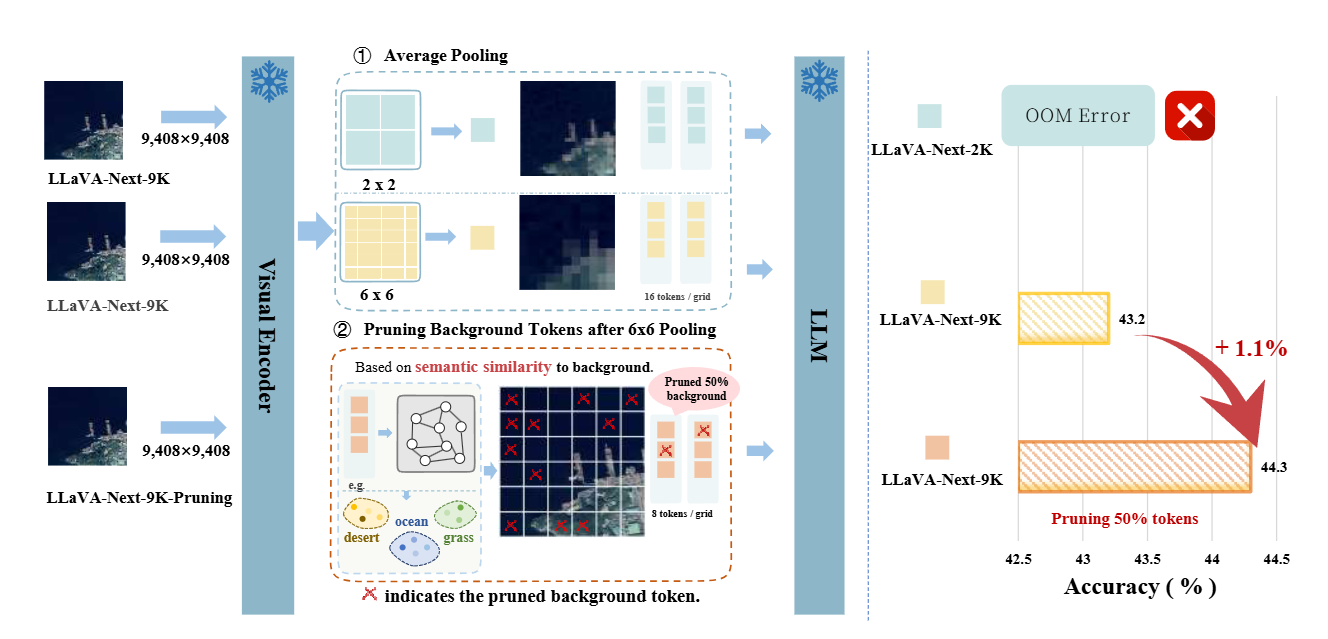
MLLM Training: My research focuses on the training of advanced multimodal models, with a particular emphasis on super-high-resolution models such as GeoLLaVA-8k (NeurlPS 25 Spotlight).
-
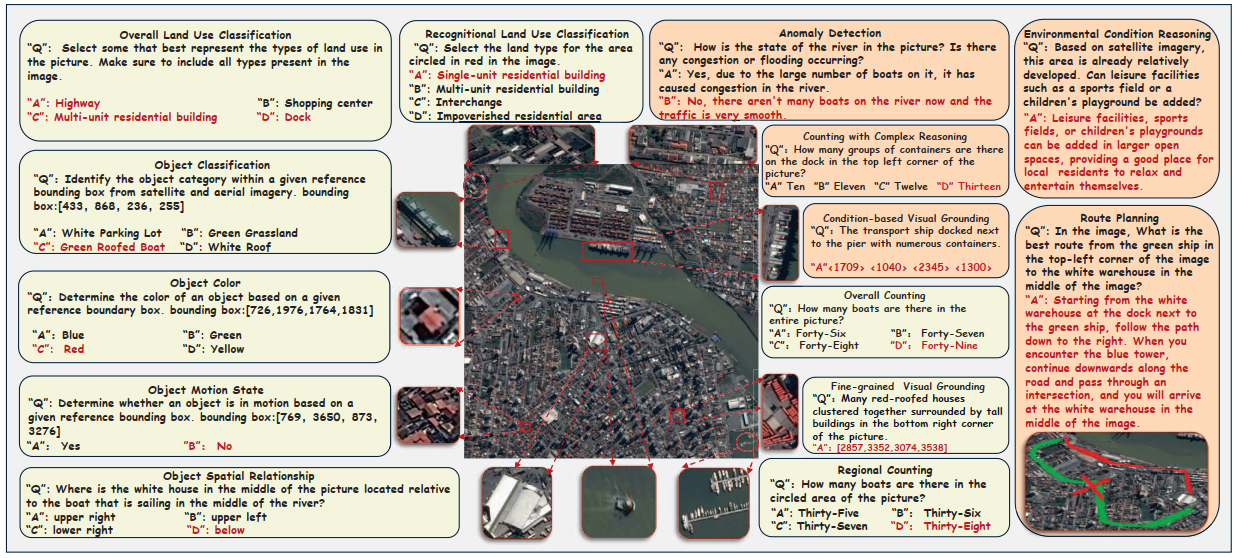
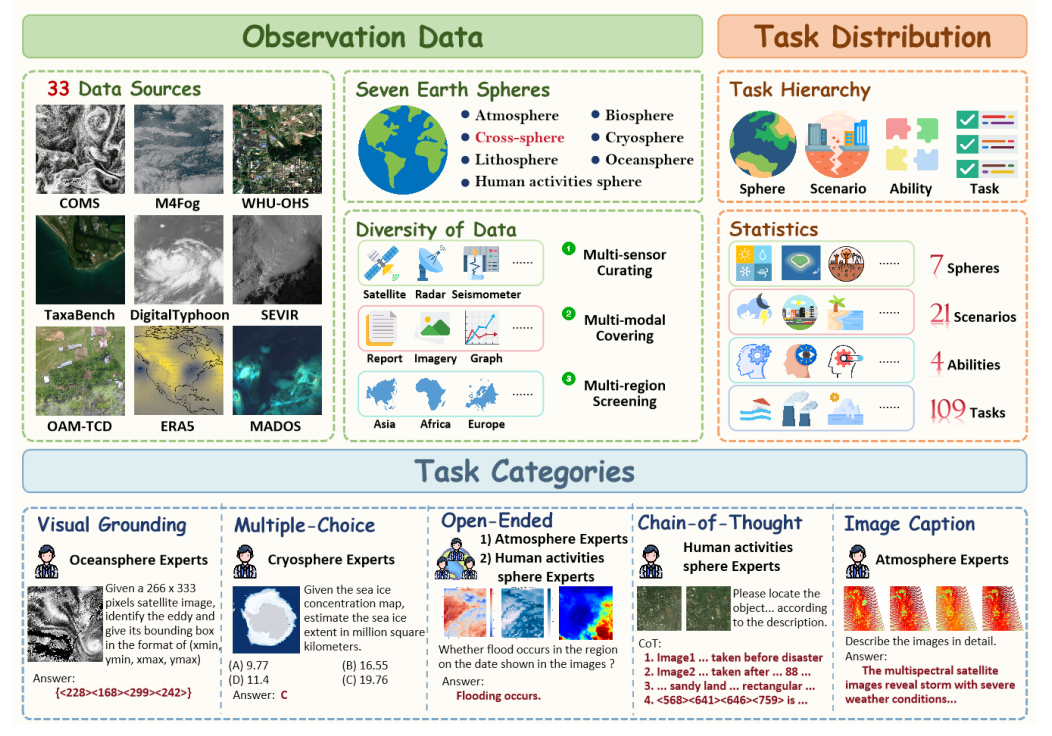
MLLM Evaluation: I contribute to multiple research initiatives aimed at enhancing the evaluation processes for large-scale models. This includes projects such as XLRS-Bench (CVPR 25 Highlight), OmniEarth-Bench(Arxiv), SFE(NeurlPS 25).
-
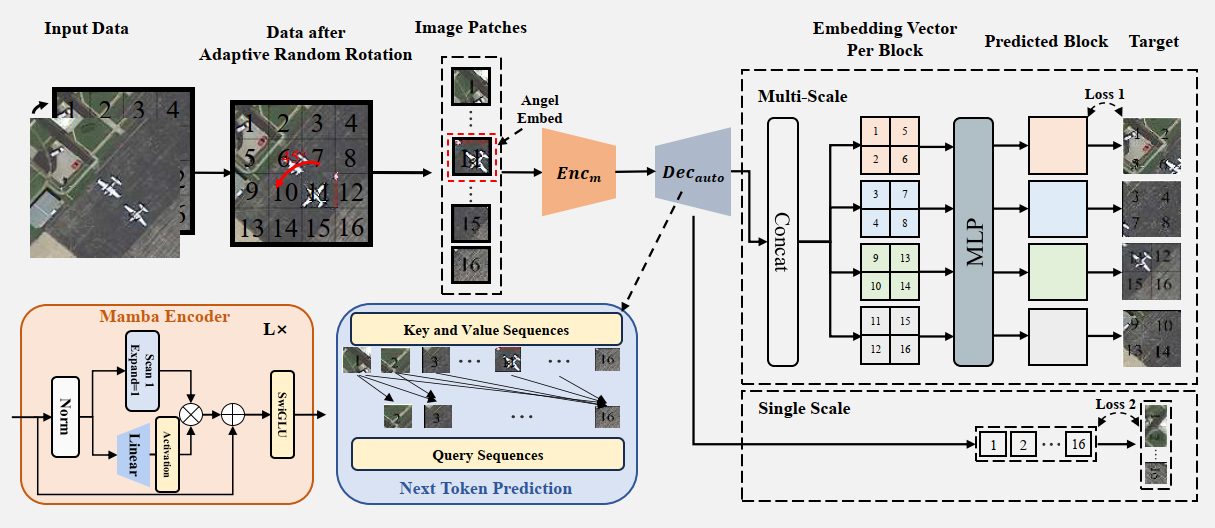
Visual Foundation Model: My research also focuses on the visual foundation models for remote sensing, such as SelectiveMAE (ICCV 25) and RoMA (NeurlPS 25).
-
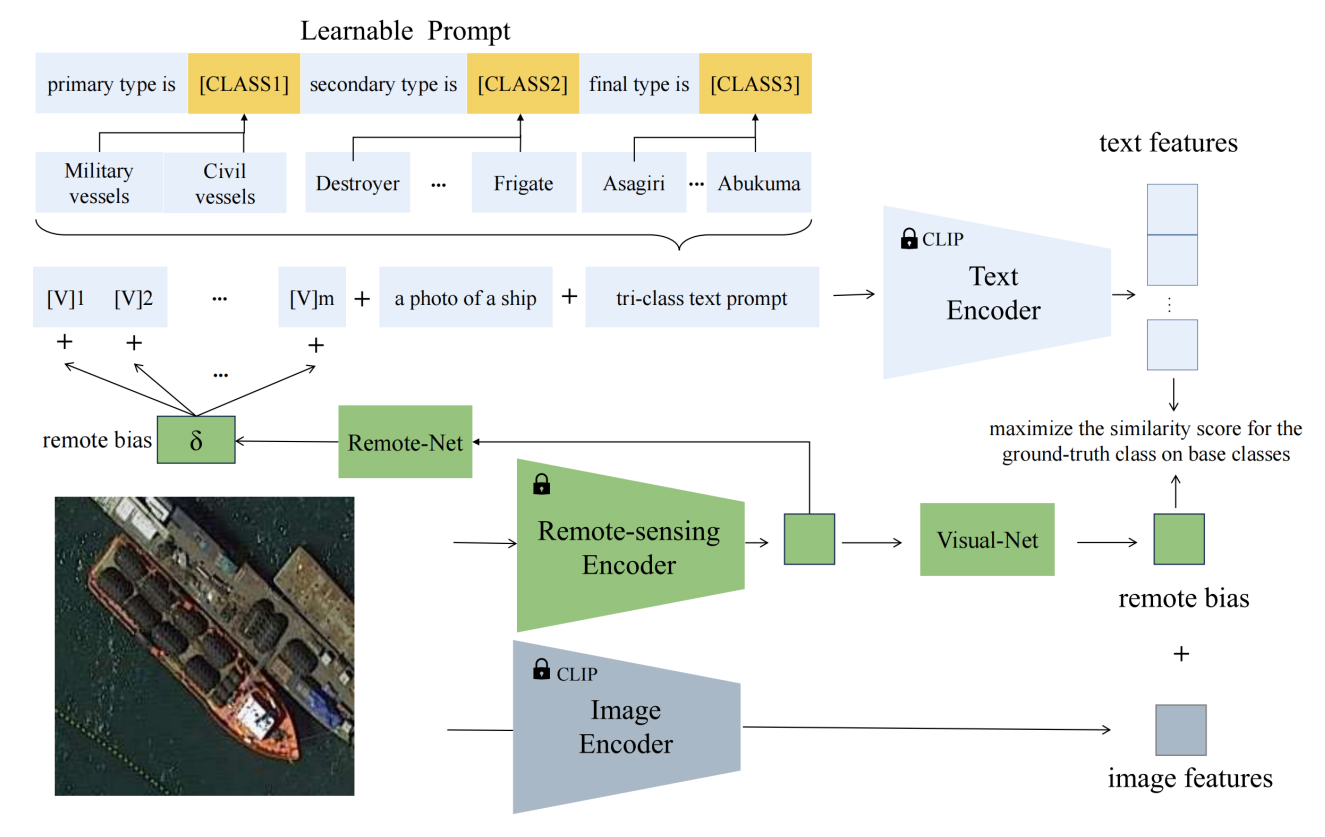
Prompt Tuning of VLMs: My work also includes the development of prompt tuning techniques for vision-language multimodal models, such as LoL (AAAI 24) and RS-tuning (TGRS).
🔥 News
- 2025.09: 🎉Two papers are accepted by NeurlPS 2025, and GeoLLaVA-8K has been selected as Spotlight.
📝 Publications
Conference

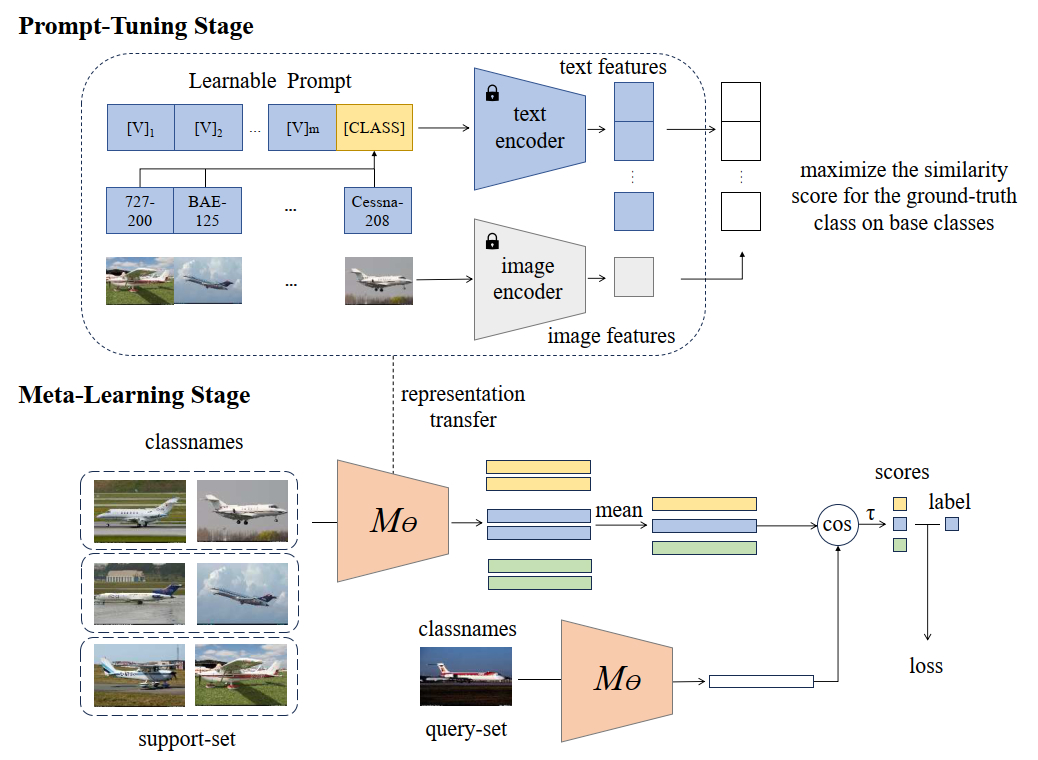
Fengxiang Wang, W. Huang, S. Yang… & L. Lan. Learning to learn better visual prompts. AAAI, 2024. (CCF-A 类会议)
[Paper]
Journal
- L. Lan,
Fengxiang Wang*, X. Zheng, Z. Wang, & X. Liu. Efficient prompt tuning of large vision-language model for fine-grained ship classification. IEEE TGRS, 2024. (SCI, 中科院一区Top,IF=8.6)
[arXiv]
💻 Work experience
- 2023.11 - 2024.12, working in THUNLP, guided by the Prof. Zhiyuan Liu and Prof. Maosong Sun.
- 2025.01 - 2025.10, working in Shanghai AI Lab, AI for Science, guided by the Prof. Lei Bai.